Night Driving Safety: How to Improve Visibility

Driving at night poses unique challenges, even for experienced drivers. Reduced visibility, glare from headlights, and unexpected hazards make night driving riskier than daytime travel. However, with the right strategies and tools, you can stay safe and confident behind the wheel after dark.
At Get Drivers Ed, we prioritize equipping drivers with essential skills for every situation, including nighttime driving. This guide will help you understand how to improve visibility and drive safely at night.
1. Why Night Driving Is More Challenging

Night driving accounts for a disproportionate number of traffic accidents, even though there are fewer vehicles on the road after dark.
Common Challenges of Night Driving:

Reduced Visibility: Human eyes are less effective in low-light conditions, making it harder to see obstacles and road signs.
Headlight Glare: Bright lights from oncoming traffic can temporarily blind drivers.
Fatigue: Drivers are more likely to feel tired at night, impacting reaction times.
Unexpected Hazards: Animals, pedestrians, or poorly lit roads increase the likelihood of surprises.
Recognizing these challenges is the first step in adopting safer nighttime driving habits.
2. Maintain Your Vehicle for Optimal Visibility

A well-maintained vehicle plays a crucial role in ensuring visibility at night.
Key Maintenance Tips for Night Driving:

Clean Your Windshield: Smudges and dirt can scatter light, reducing clarity. Clean both the interior and exterior regularly.
Check Your Headlights: Ensure both headlights are functioning and properly aligned to avoid uneven lighting.
Replace Wiper Blades: Worn blades can smear water and debris, obstructing your view during rainy nights.
Inspect Your Mirrors: Keep mirrors clean and adjust them to reduce glare from vehicles behind you.
By maintaining your car, you reduce the risk of visibility issues that could lead to accidents. At Get Drivers Ed, we emphasize the importance of regular vehicle checks to enhance safety.
3. Adjust Your Driving Habits for Nighttime Safety
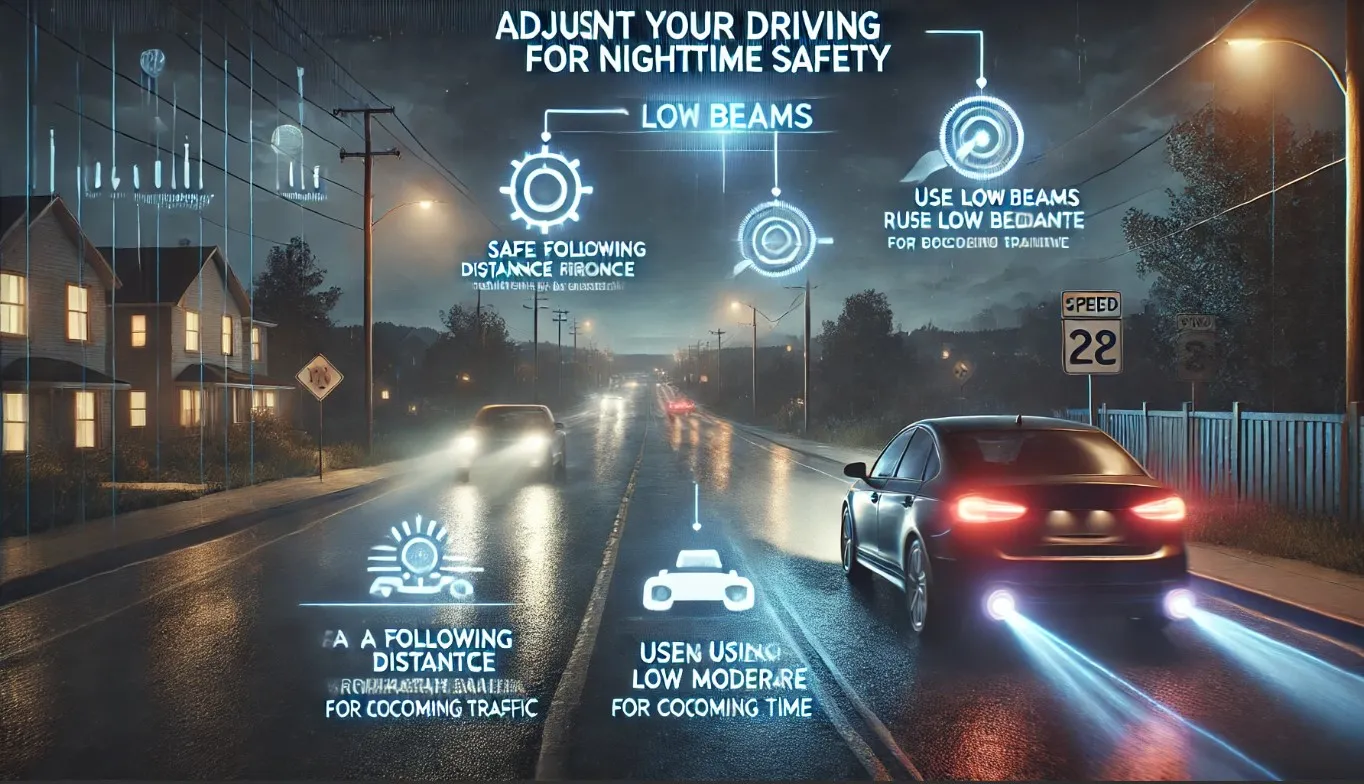
Driving at night requires a more cautious and deliberate approach.
Safe Driving Practices:

Reduce Speed: Lower speeds give you more time to react to unexpected hazards.
Increase Following Distance: Keep a greater gap between your car and the vehicle ahead to allow for longer reaction times.
Avoid High Beams in Traffic: Use low beams when other vehicles are nearby to prevent blinding oncoming drivers.
Scan for Hazards: Continuously scan the road and shoulders for pedestrians, animals, and other obstacles.
Adjusting your driving habits to suit nighttime conditions is an essential skill that we cover in Get Drivers Ed courses.
4. Combat Headlight Glare Effectively

Glare from oncoming headlights is a common issue for night drivers, but there are ways to minimize its impact.
Tips to Reduce Glare:

Focus on the Right Side: Look at the white line on the road’s edge to avoid direct exposure to bright lights.
Dim Your Dashboard Lights: A bright dashboard can create reflections, reducing your ability to see the road clearly.
Use Polarized Glasses: Specially designed glasses can help reduce glare and improve night vision.
Learning how to manage glare can significantly enhance your nighttime driving experience.
5. Upgrade Your Vehicle’s Lighting for Better Night Vision

Modern technology offers several upgrades that can improve visibility for night driving.
Lighting Enhancements:

LED or HID Headlights: These lights are brighter and provide better illumination than traditional halogen bulbs.
Fog Lights: Useful for reducing glare during foggy nights, improving visibility closer to the ground.
Adaptive Headlights: Automatically adjust the direction and range of light based on your speed and steering.
Investing in these upgrades can make night driving safer and less stressful. At Get Drivers Ed, we provide guidance on vehicle features that enhance safety.
6. Stay Alert and Minimize Distractions

Driving at night requires your full attention, so staying focused is crucial.
How to Stay Alert:
Get Adequate Rest: Avoid driving if you’re feeling drowsy or fatigued.
Limit Distractions: Keep your phone out of reach and minimize conversations while driving.
Take Breaks on Long Drives: Stop every two hours to rest and recharge, especially during late-night travel.
By staying alert and minimizing distractions, you’ll reduce the risks associated with nighttime driving.
7. Plan Your Route and Prepare for the Unexpected

Preparation is key to safer night driving.
Planning Tips:
Use GPS or Maps: Familiarize yourself with the route to avoid confusion in poorly lit areas.
Check Weather Conditions: Rain or fog can make night driving even more challenging.
Pack an Emergency Kit: Include essentials like a flashlight, first aid supplies, and a reflective triangle in case of a breakdown.
At Get Drivers Ed, we teach drivers the importance of preparation to ensure they’re ready for any situation.
Conclusion: Drive Confidently at Night with Get Drivers Ed

Night driving doesn’t have to be intimidating. By maintaining your vehicle, adjusting your driving habits, and staying alert, you can significantly reduce risks and improve visibility. Whether you’re navigating city streets or rural roads, being prepared and cautious is essential.
At Get Drivers Ed, we’re committed to helping drivers master the skills needed for safe and confident driving in all conditions. Our online courses provide practical tips and expert guidance to help you navigate the challenges of night driving with ease.
Comments
Share your thoughts by leaving a comment below.