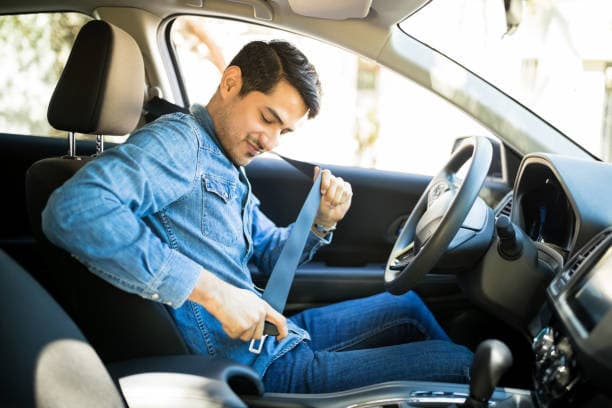
The Lifesaving Habit: Importance of Seatbelt Use
TL;DR:
Seatbelt use significantly reduces the risk of injury and death in accidents.
It's the law, and we explain the legal requirements in our drivers ed courses.
Learn the physics behind how seatbelts protect you in a crash.
Get the facts about common seatbelt myths and child safety seat essentials.
The simple act of buckling up a seatbelt is one of the most effective ways to save lives on the road. At Get Drivers Ed, we emphasize the importance of this basic safety measure in our drivers ed courses. This blog post explores why seatbelt use is crucial for every driver and passenger and how it contributes to overall road safety.
Statistical Evidence: The Life-Saving Impact of Seatbelt Use
Seatbelts save lives — it’s a fact supported by substantial data. Studies show that when seatbelts are used correctly, the risk of fatality in a crash is dramatically reduced. According to the National Highway Traffic Safety Administration (NHTSA), seatbelts reduce the risk of death by 45% for front-seat passengers and by 60% for back-seat passengers.
Get Drivers Ed Insight:
In our drivers ed courses, we present real-world statistics to reinforce the importance of seatbelt use. Our students learn how these statistics directly impact their safety, helping them develop the habit of buckling up before every trip.
Legal Requirements: Buckling Up Is the Law
Wearing a seatbelt isn’t just a safety recommendation; it’s the law in many areas, including Texas. In fact, failure to wear a seatbelt can result in fines and penalties. Most states, including Texas, have enacted primary seatbelt laws, which means a police officer can pull you over simply for not wearing a seatbelt.
Get Drivers Ed Reminder:
At Get Drivers Ed, we ensure our students are well-informed about the legal aspects of seatbelt use. By emphasizing the legal implications, we help future drivers understand that seatbelt use is both a safety measure and a legal obligation.
The Physics of Car Crashes: How Seatbelts Keep You Safe
Understanding the physics of a car crash can be eye-opening. When a car comes to a sudden stop during a collision, the occupants inside continue to move at the vehicle's speed due to inertia. Without a seatbelt, the driver or passenger will be thrown forward, potentially leading to severe injury or death.
Get Drivers Ed Explanation:
In our drivers ed courses, we break down the physics behind how seatbelts function. Seatbelts help to slow down the movement of the body gradually, reducing the impact of a crash and increasing the chances of survival.
Common Myths About Seatbelts: Setting the Record Straight
Despite overwhelming evidence supporting the effectiveness of seatbelts, several myths persist. Some people believe that seatbelts aren’t necessary for short trips, while others argue that airbags alone offer enough protection. These misconceptions can be dangerous, as they encourage risky behavior.
Get Drivers Ed Fact Check:
At Get Drivers Ed, we debunk common myths about seatbelt use. We ensure our students are equipped with accurate information, so they understand that no matter the length of the trip or the vehicle's features, seatbelts are essential for safety.
Child Safety Seats: Proper Restraints for Young Passengers
Ensuring that children are properly secured in the appropriate child safety seat is just as important as seatbelt use for adults. Children under the age of 12 should always ride in the back seat, and their car seat should be appropriate for their age, weight, and height.
Get Drivers Ed Guidance:
In our drivers ed courses, we educate our students on the importance of child safety seats. We provide guidance on the correct use of booster seats, infant seats, and convertible car seats, ensuring that the youngest passengers are always securely buckled up.
Conclusion
Seatbelt use is one of the simplest yet most effective ways to protect yourself and your passengers while driving. It not only saves lives but is also legally required in many places. Whether you're driving across town or taking a long road trip, buckle up before you hit the road. At Get Drivers Ed, we’re committed to educating new drivers about the importance of this life-saving habit.
If you’re ready to become a responsible and safe driver, explore our drivers ed courses at Get Drivers Ed Online Courses. Start your journey today and become a safer, more informed driver.
Comments
Share your thoughts by leaving a comment below.